Vík and Reynisfjara: Iceland's Black-Sand Coast
Photo note: Unless explicitly credited otherwise, the photos in this Iceland article are our original images from our September 27-October 6, 2024 Ring Road trip.
อ่านบทความนี้เป็นภาษาไทย: เปิดเวอร์ชันภาษาไทย
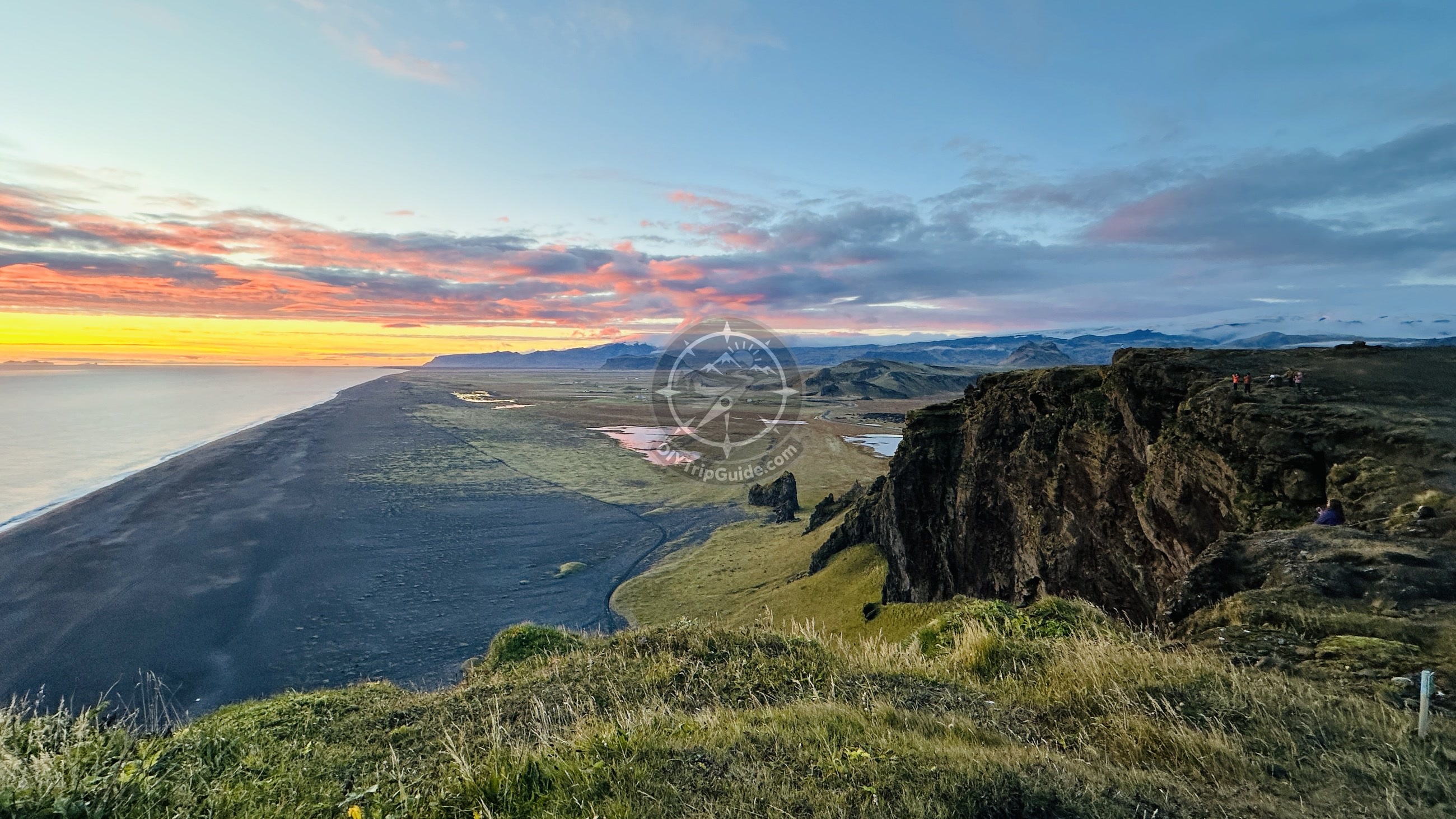 Dyrholaey on the South Coast, a separate viewpoint to consider before continuing toward Vik.
Vík and Reynisfjara are easy to describe in one sentence—black sand, basalt columns, and sea stacks—but that undersells the experience. This is one of the most memorable stops on an Iceland loop, and also one of the places where a beautiful photograph can tempt visitors dangerously close to the ocean.
On our counter-clockwise loop, the Vík area came after the Golden Circle and before the longer drive toward Fjaðrárgljúfur and Skaftafell. It worked well as a flexible overnight area, with places to refuel, eat, and wait out bad weather.
Reynisfjara black-sand beach
Reynisfjara is the classic black-beach stop. The beach is backed by dark basalt formations, including the column wall and Hálsanefshellir cave. Offshore, the Reynisdrangar sea stacks give the view its distinctive silhouette.
The beach is also exposed and unpredictable. Safetravel advises visitors to stay well back from the water, never turn their back on the sea, keep children close, and watch for falling rocks. Follow warning lights and closure signs: under an orange warning, stay at least 25 metres from the water; under a red warning, the beach is closed except for the designated viewpoint. Read the current Black Beach Safety guidance from Safetravel before you go.
Treat this as a viewpoint and geology stop, not a beach for walking at the waterline. A telephoto lens is safer than trying to get closer to the waves.
Dyrhólaey and Kirkjufjara
Dyrhólaey is a separate stop west of Vík, with a headland, a sea arch, and wide views along the South Coast. Allow time for both viewpoints when access and conditions permit.
The nearby Kirkjufjara beach has its own wave danger. Check signs and local conditions rather than assuming a quiet-looking sea is safe. Visit Iceland's Reynisfjara warning explains why the risk is not obvious from photographs.
Vík village
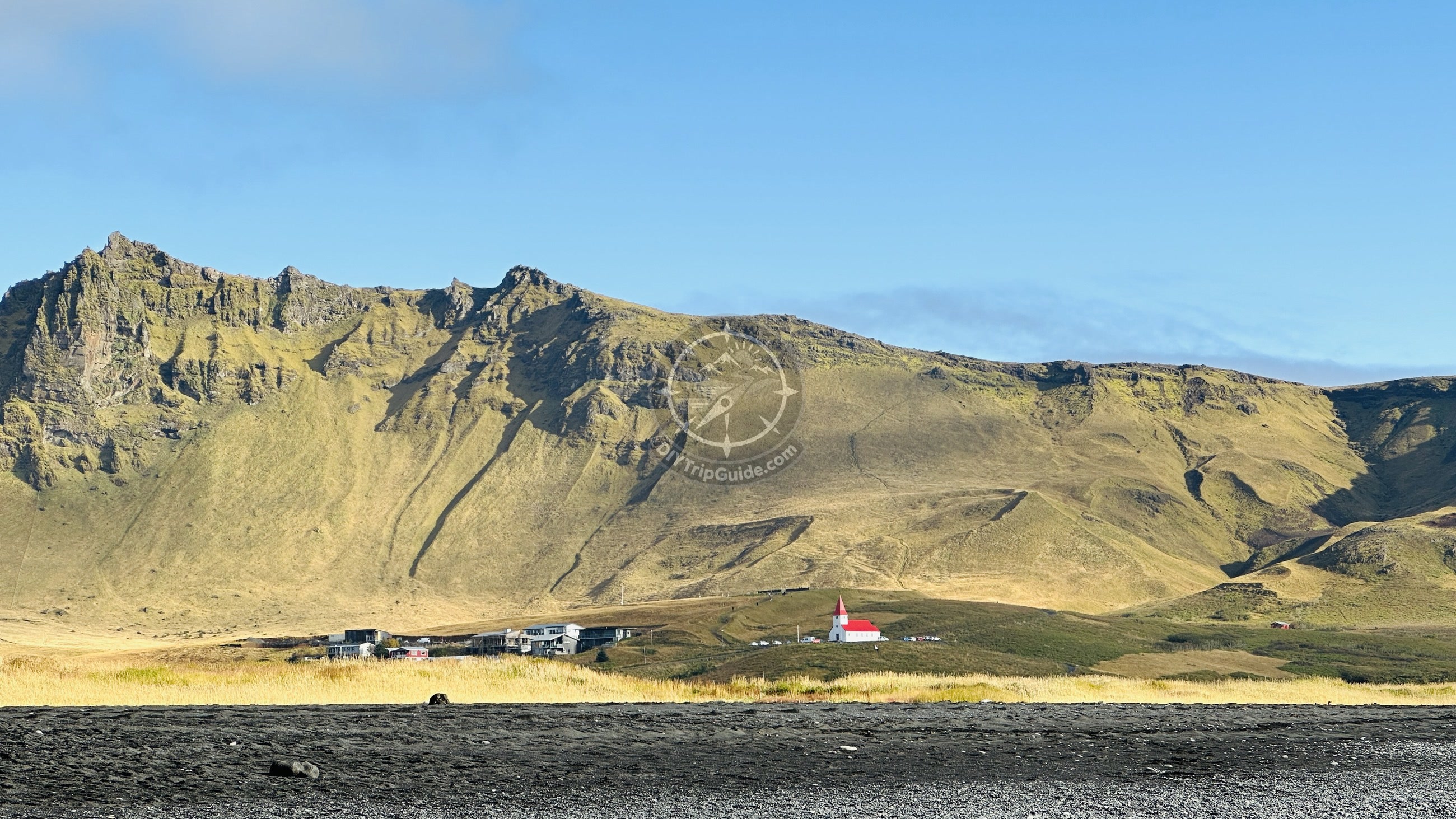
Vík is a practical base as much as a scenic stop. Use it to top up fuel, buy food, check the forecast, and decide whether to continue east toward the canyon and glacier country. The church above the village is a quick viewpoint when the weather is clear.
For a warm indoor break near Reynisfjara, Black Beach Restaurant is an option to check for coffee, sandwiches, soups, cakes, and Icelandic-style meals. Opening hours can change seasonally, so confirm before planning around it. See the South Coast overview for the broader route.
A practical camper-van day
- Start with Dyrhólaey if the forecast gives you a clear coastal window.
- Visit Vík for fuel, groceries, or a coffee break.
- Continue to Reynisfjara with enough daylight and time to use the viewpoints safely.
- If conditions deteriorate, shorten the beach visit and choose an inland or indoor stop.
- Sleep near Vík or continue east only if the driver is fresh and the weather is stable.
Do not make Reynisfjara the final stop after a long driving day if that means arriving tired or in darkness. Wind, wet rocks, low visibility, and sneaker waves make a rushed evening visit a poor trade.
If you need electrical hookup at the campsite, request a powered pitch when booking or checking in. At a busy campsite, arrive early if electricity matters. See Our Counter-Clockwise Iceland Campsite Guide and the Hertz camper-van review.
Photography without unnecessary risk
Use marked viewing areas, keep a safe distance from the surf, and watch the wave pattern before composing a shot. A wide lens captures the basalt columns and sea stacks; a longer lens compresses the stacks without putting you near the water. Wind can make tripods unstable, so a fast shutter speed and secure camera strap are useful.
After Vík and Reynisfjara, continue east to our Jökulsárlón and Skaftafell guide, or step back to the complete counter-clockwise loop.