Flying a Drone in Iceland: Rules, No-Fly Areas, and Practical Advice
Photo note: Unless explicitly credited otherwise, the photos in this Iceland article are our original images from our September 27-October 6, 2024 Ring Road trip.
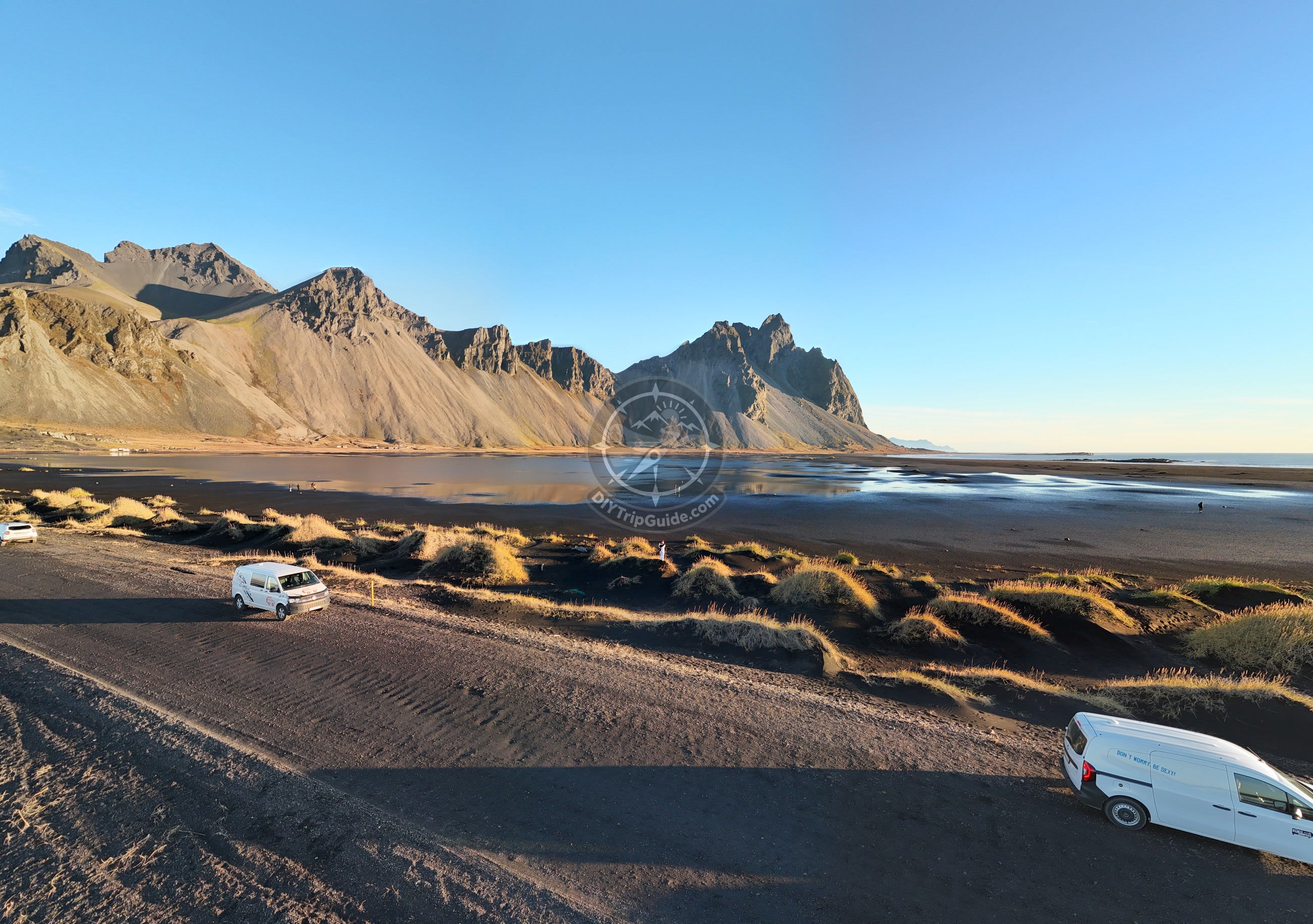 Aerial view near the Viking Village and Vestrahorn area, where local permission matters before launching.
Iceland looks like one enormous open-air drone location. In practice, it is a place where a beautiful launch point can also be near wildlife, visitors, an airport, a protected area, private property, or a sensitive site.
The safest approach is to treat every flight as a small permission and planning exercise. Check the current official drone map, check the protected-area rules for the specific location, and ask the landowner or attraction operator before launching from private or managed property.
This is a travel-planning summary, not legal advice. Rules and restricted zones can change. Check the official Icelandic sources before every flight.
The basic open-category rules
Iceland has implemented the European Union drone regulations. For ordinary low-risk flights in the open category, the main principles are:
- Keep the drone below 120 metres from the ground.
- Keep it within visual line of sight.
- Never fly over crowds.
- Keep the drone away from uninvolved people according to its class and operating subcategory.
- Do not carry dangerous goods or drop objects.
- Give way to all other air traffic.
- Follow instructions from air-traffic services, police, the Coast Guard, and aviation authorities.
The exact requirements depend on the drone's weight, C-class marking, camera, and the A1/A2/A3 subcategory. Operator registration and competency requirements can apply even to recreational visitors.
Start with the official Iceland drone rules, open-category guidance, and registration information at flydrone.is.
Where flying is restricted or prohibited
Airports and aviation areas
Do not launch at an airport or inside a restricted airport zone without the required permission. Be especially careful near smaller airstrips and non-scheduled airports. A scenic beach or valley may still be part of an aviation area, so check the map rather than judging by what you can see.
Sensitive sites
Iceland's specific restrictions include protected distances around sensitive sites such as power facilities, government buildings, police stations, prisons, hospitals, and other listed locations unless the responsible owner or operator authorizes the flight.
Protected areas
Protected areas do not all have one universal drone rule. Restrictions can be seasonal or tied to wildlife, nesting areas, visitor tranquility, or the management plan for that particular area. Some flights require a permit.
This matters for places on a Ring Road itinerary such as Vatnajökull National Park, Þingvellir, and other protected landscapes. Read the Environment Agency guidance for drones in protected areas and check the specific area's current conditions.
Private or managed attractions
A drone may be legal in the airspace but still inappropriate or unauthorized from a private attraction, campsite, farm, hotel, or visitor property. Ask the landowner or operator before launching, and respect requests to avoid filming guests, staff, buildings, or animals.
At Vestrahorn, for example, ask the Viking Café for permission before flying around the mountain, Viking Village, or campsite. See our Vestrahorn and Viking Village guide.
Where can you fly?
There is no single permanent list of “safe drone spots.” A location is only a candidate after you check all of the following:
- The official Icelandic drone map and current restricted zones.
- The protected-area rules and seasonal wildlife restrictions.
- Airport and airstrip proximity.
- Private-property or attraction permission.
- People, vehicles, livestock, birds, and other aircraft at the actual launch time.
- Wind, visibility, and a safe place to launch and land.
Remote-looking does not automatically mean unrestricted. The opposite is also true: a location may be legally flyable but still a bad idea because of wind, nesting birds, tourists, or a narrow launch area.
A practical Iceland flight checklist
- Register the operator and complete the required competency training before the trip.
- Download or bookmark the official map before leaving Reykjavík.
- Carry the drone registration number and any required proof of competency.
- Ask cafés, campsites, landowners, and attraction operators before launching on their property.
- Keep the drone in sight and below the legal altitude.
- Avoid birds, nesting areas, horses, sheep, and other wildlife.
- Do not launch near crowds or busy viewpoints.
- Plan a safe landing area before taking off.
- If the wind is strong, keep the drone packed away—the shot is not worth losing the aircraft or disturbing other travelers.
Our personal lesson
The most important permission was not a form on a website. It was the simple conversation before flying at Vestrahorn. The café could explain the local situation, and asking first showed respect for the property and the people staying there.
Iceland rewards patience. Often the strongest aerial footage comes from waiting for a clear, quiet window rather than launching the moment you arrive.
For the road-trip context, see the complete counter-clockwise itinerary and the Hertz camper-van review.