Iceland Campsites on Our Counter-Clockwise Ring Road Loop
Photo note: Unless explicitly credited otherwise, the photos in this Iceland article are our original images from our September 27-October 6, 2024 Ring Road trip.
อ่านบทความนี้เป็นภาษาไทย: เปิดเวอร์ชันภาษาไทย
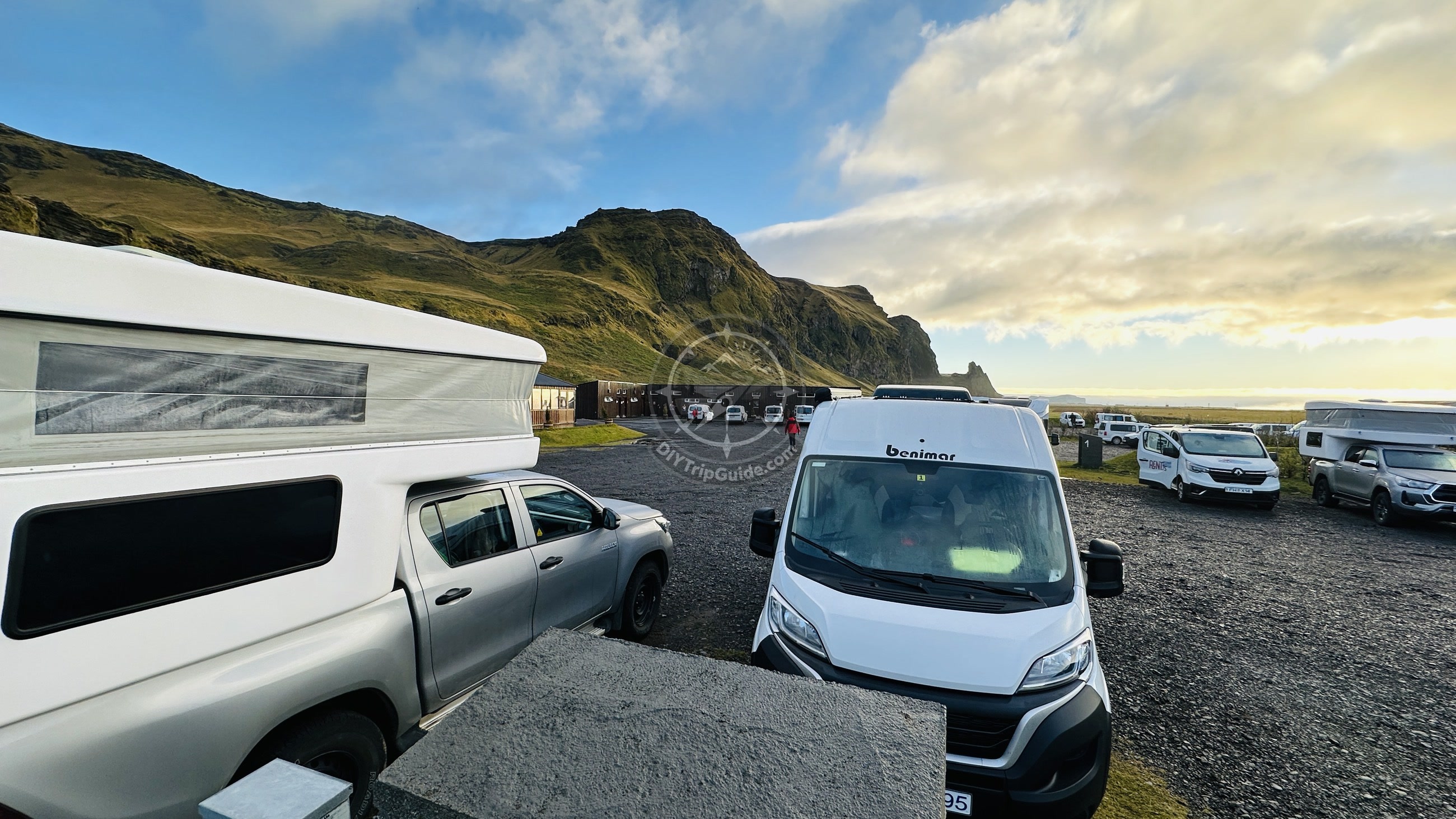
 Skaftafell campsite on October 1, with camper vans and the mountain landscape beyond the site.
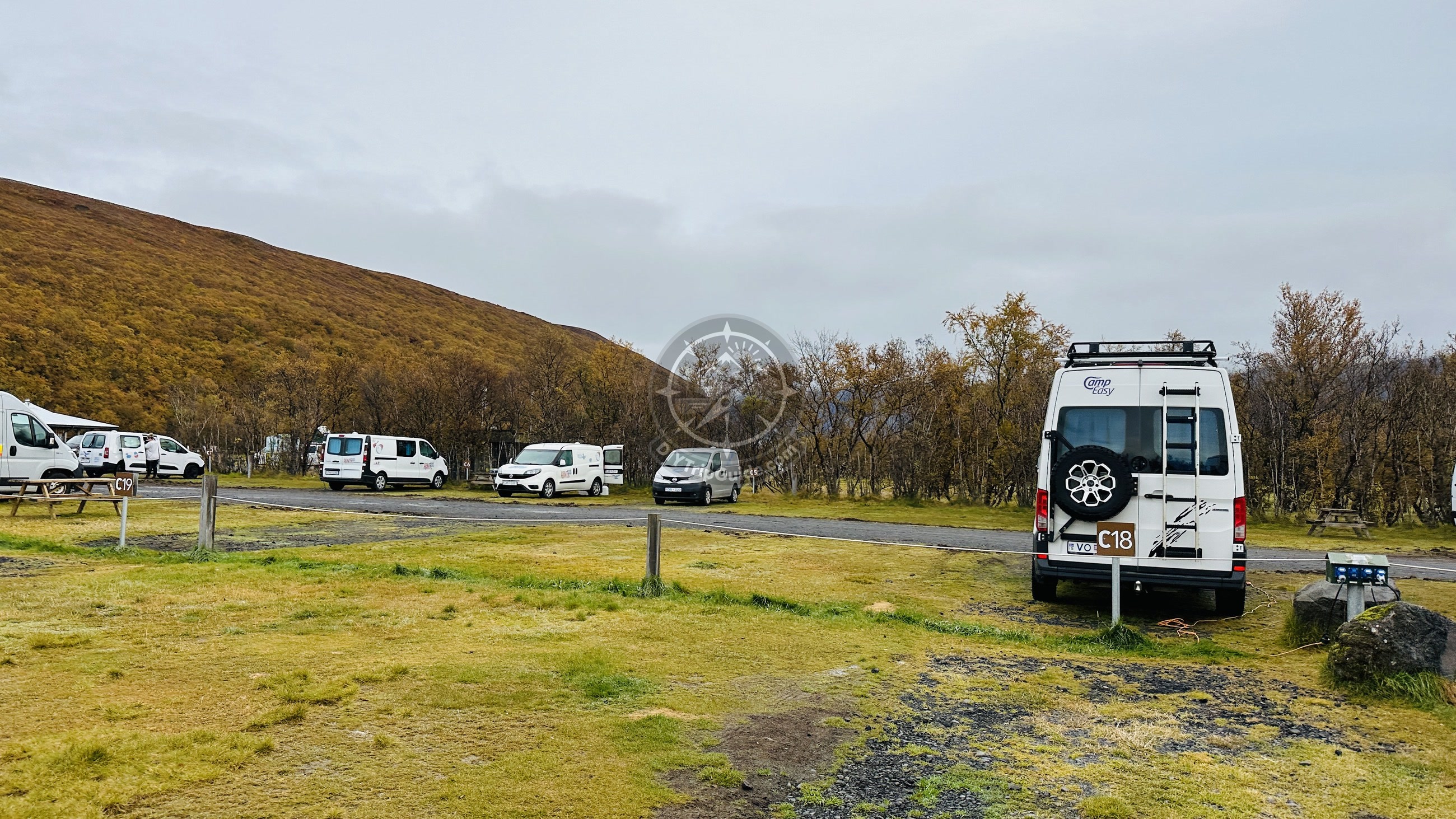
 Vík campsite during our South Coast stop.
A campsite can change the whole feel of an Iceland camper-van day. The right one gives you a warm shower, a place to empty and refill the van, a good night's sleep, and—if you request it—a power connection. The wrong one can leave you arriving late, searching for an electrical hookup, or discovering that the site is more exposed than it looked on the map.
This is our route-specific review of the overnight stops on the counter-clockwise loop from September 27 to October 6. Conditions, prices, opening dates, and facilities change, so use this as a personal planning guide and verify each campsite before departure.
The biggest lesson: ask for electricity
Not every campsite space has an electrical hookup. Some sites have a dedicated powered section, while others have plenty of vehicle space but no electricity at all. If you need shore power for the camper van, ask when booking or checking in. Do not assume that arriving at a campsite automatically means a powered pitch.
At a busy campsite, arrive early if electricity matters. Powered spaces can disappear before the general camping area fills up, especially when several camper vans arrive together. If you arrive late, have a backup plan for charging and decide whether the next morning's driving makes a powered pitch essential.
Campsites from our loop
| Stop | Why it worked | Main limitation |
|---|---|---|
| Reykjavík campsite | Convenient first and last night; easy place to learn the van and reset before the airport | Urban rather than scenic; busy and power may need to be requested |
| Golden Circle-area campsite | Kept the first sightseeing day flexible and avoided returning to Reykjavík | Check the current campsite listing and seasonal opening before relying on it |
| Vík campsite | Practical base after the South Coast and close to food and services; we also saw the aurora here | The most crowded campsite of our trip because there are limited camping choices nearby; ask early about electrical spaces |
| Skaftafell campsite | Outstanding location for glacier-country hiking, with clean and spacious bathroom facilities; food trucks and food at the visitor-center restaurant were available during our visit | Large, popular site; electrical areas are separate from non-powered vehicle areas |
| Vestrahorn / Viking Café campsite | Exceptional mountain-and-coast setting; staying here let us visit Stokksnes at both sunset and sunrise | Private visitor property; contact the café to book. Powered pitches are available but limited |
| Camp Egilsstaðir | Practical East Iceland base for supplies, the Eastfjords, and the next long drive | More functional than dramatic; availability and hookups should be confirmed |
| Hlíð ferðaþjónusta, Mývatn | Useful base for the Mývatn volcanic landscapes, geothermal stops, and a bath day; this is the campsite we believe we used in the area | Confirm the current name, opening dates, facilities, and electrical-pitch availability before relying on it |
| Kirkjuhvammur, Hvammstangi | Sheltered stop near Route 1 with services and a calmer end to the northern section | A detour from the main road; electricity is a separate charge at this site |
| Reykjavík campsite | Easy final night before departure and a place to clean up the van | Less of a wilderness experience than the route's scenic campsites |
Our campsite pros and cons
The most scenic stop was Vestrahorn, where the campsite made it possible to enjoy the mountain and Viking Village without turning the visit into a rushed detour. Skaftafell had the strongest combination of location and access to outdoor activities, but its popularity made arrival timing more important.
Vík was the busiest campsite of our trip. There are relatively few camping choices around this part of the South Coast, so spaces filled quickly. If you need an electrical hookup, arrive early and request a powered pitch as soon as you check in. The reward for staying there was memorable: we were able to see the northern lights from the campsite.
Skaftafell was the most convenient campsite for everyday camper-van needs. The bathroom and restroom facilities were clean and spacious, and we could find food without having to move the van: food trucks were available, along with food from the restaurant at the visitor center. That combination made it especially easy after a day of glacier-country walking.
Viking Café and Guesthouse was a different kind of stop. Staying there gave us enough time to visit Stokksnes at sunset and return again for sunrise, when the light on Vestrahorn was completely different. Electrical pitches were available, but only in limited quantity, so request one when arranging the stay rather than assuming it will be available on arrival.
Around Mývatn, our notes indicate that we camped at Hlíð ferðaþjónusta. We are keeping that identification slightly cautious because campsite names and listings can change, but it was the stop associated with our Mývatn stay. Verify the current listing and facilities before booking.
At Hvammstangi, the campground was also a good place to watch the sky. We saw a nice aurora from the campground, which made this otherwise practical overnight stop one of the memorable nights of the loop.
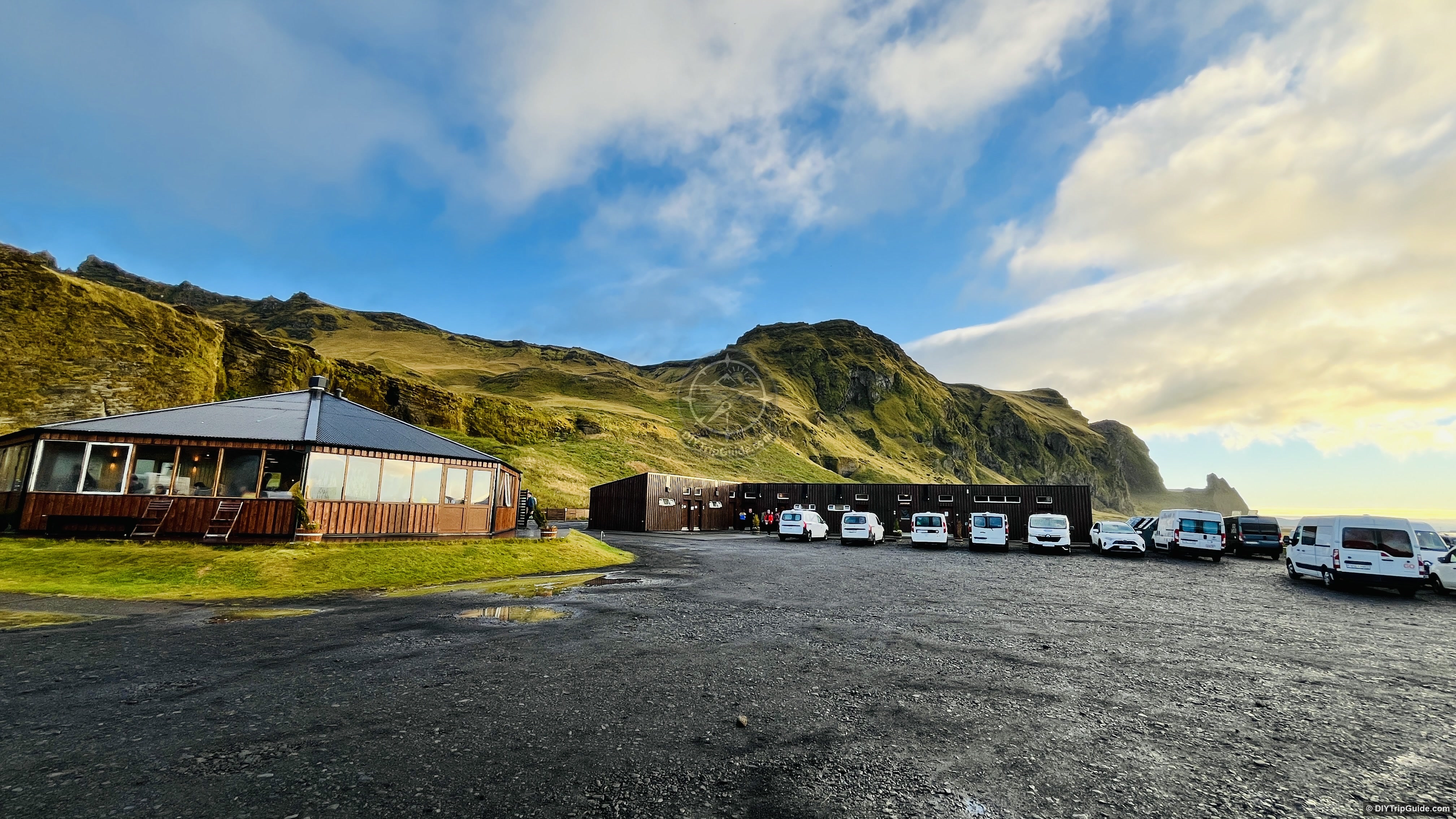
 The Egilsstaðir campsite from our East Iceland route.
The new photos also help show the difference between the sites: Vík felt like a busy gravel camping area with limited alternatives, while Egilsstaðir was a practical place to reset, buy supplies, and prepare for the next long section.
The most practical bases were Reykjavík, Egilsstaðir, and Hvammstangi. They were useful for supplies, charging, and breaking up long drives. Vík and Mývatn were valuable because they placed us close to major attractions, but both need more careful planning when the season is busy.
A better arrival strategy
Before leaving each morning, decide whether you need electricity that night. If yes, contact the campsite or arrive early enough to improve your chances. If no, you gain more flexibility and can choose a site based on scenery, driving distance, or weather.
Keep a backup campsite in mind for the longer stretches. Iceland's weather, road conditions, and fatigue can make a planned arrival time unrealistic. The legal and responsible default for a camper van is to use an organized campsite unless you have clear permission for another arrangement.
Useful questions to ask
- Is a powered pitch available for a camper van?
- Does the electrical hookup need to be requested or reserved?
- What time is the latest check-in?
- Are showers, laundry, kitchen, dumping, and fresh-water facilities available?
- Is the site open on our travel dates?
- Can we arrive late if weather changes the driving day?
For the vehicle routine, see the Hertz camper-van review. For food planning, read the camper-van food guide, and for the full sequence see the counter-clockwise Ring Road itinerary.
Facilities and powered pitches can change from season to season, so confirm the current hookup policy directly with each campsite before setting out.