
Nikko Day Trip from Tokyo: SPACIA X, Temples & an Overnight Option
อ่านบทความนี้เป็นภาษาไทย: เปิดเวอร์ชันภาษาไทย
Part of our Recommended Day Trips from Tokyo collection. อ่านภาษาไทย
Yes, Nikko works as a day trip from Tokyo. Choose central Nikko for shrines, a red bridge over the river and a leisurely lunch. Stay two days and one night if you also want Lake Chuzenji, Kegon Falls and time to enjoy a hot-spring inn. The mistake is trying to fit both versions into one short winter day.
This is a researched planning guide, not a first-hand hotel or train review. Transport and seasonal information was checked in September 2026; the schedules below are examples to confirm for your travel date.
Nikko at a glance: who, what, where, when and why
| Question | The useful answer |
|---|---|
| Where is Nikko? | In Tochigi Prefecture, north of Tokyo. The town is a gateway to Nikko National Park. |
| Why visit? | Elaborate shrine architecture, wooded grounds, river walks and access to mountain scenery. |
| Who is it best for? | Couples, culture lovers, photographers and travelers who enjoy making the train ride part of the day. |
| What can you do in one day? | Visit Toshogu, see Shinkyo and choose one additional temple or riverside walk. |
| When should you go? | Choose your season by the experience you want; autumn color arrives earlier in the mountains than in town. |
| How do you get there? | A Tobu limited express from Asakusa or Tokyo Skytree is convenient; JR routes are another option. |
The Shrines and Temples of Nikko are a UNESCO World Heritage property. Toshogu is dedicated to Tokugawa Ieyasu, and its highly detailed decoration gives a visit a very different character from a simple woodland shrine. Official Toshogu visitor guide.
Is one day in Nikko enough?
One day is our recommendation for a first visit focused on central Nikko. Keep the plan to two main sights, lunch and one optional stop. You can leave your luggage in Tokyo and return to the same accommodation that evening.
| Choose a day trip when… | Stay overnight when… |
|---|---|
| The train ride and Toshogu are your priorities. | A ryokan dinner and onsen are part of the experience you want. |
| You prefer to keep your Tokyo base. | You want the shrines and the lake-and-waterfall area. |
| You are comfortable with a full day out. | You prefer more time between sights or an early start in the mountains. |
Nikko covers a large area. Lake Chuzenji is an onward bus journey of roughly 50 minutes from the station in normal conditions, not a short walk from Toshogu. That extra travel time is the main reason to add a night. Nikko National Park access guide.
How to get to Nikko from Tokyo
For this itinerary, book a train to Tobu-Nikko. JR Nikko is a separate nearby station. Kinugawa-Onsen is a different destination: some Tobu trains head there instead, so check the destination before paying.
SPACIA X: our choice for a special train ride
SPACIA X takes approximately two hours from Asakusa and also stops at Tokyo Skytree. Choose it for the combination of comfortable surroundings and the journey through the Tokyo outskirts toward Tochigi. The mountain lake and waterfall scenery comes later, after you arrive in Nikko.
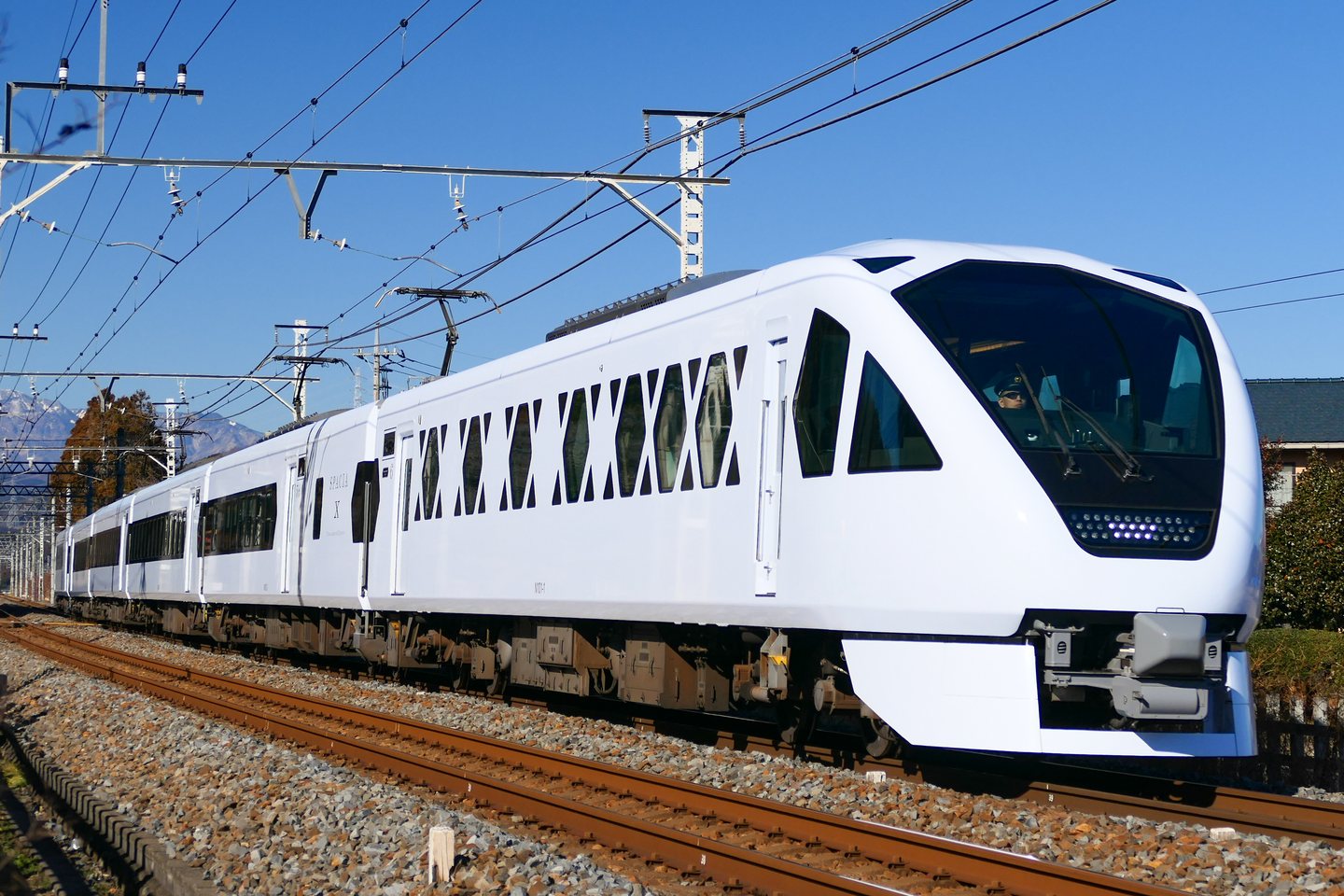

Our seat preferences for two adults are:
- Cockpit Lounge: the sofa-and-table setting makes the journey feel like part of a date. Our first choice for atmosphere.
- Premium: electric reclining seats; a good choice when seat comfort matters most.
- Box Seat: two facing seats in a partitioned area, good for conversation; one person rides backward.
- Standard: a sensible way to enjoy the same train and route at a lower cost.
Browse Tobu’s seat photographs before choosing. The lounge and Premium are different products. Passengers in Premium and Standard need an onboard online queue ticket for café takeaway purchases; lounge passengers can visit the counter without that ticket. Food and drinks are extra. Official café rules.
Other train options
Classic SPACIA Kegon and Revaty Kegon are useful alternatives on the Tobu route. Choose one if the departure time works better or SPACIA X is full. Revaty has seat power outlets and Wi-Fi. Classic SPACIA · Revaty.
JR via Utsunomiya: take the Tohoku Shinkansen from Tokyo Station and change to the JR Nikko Line. Selected JR/Tobu through services also connect Shinjuku with the Nikko area. Check the current timetable and the exact coverage of any rail pass you already hold. A nationwide Japan Rail Pass alone does not cover SPACIA X. Access options · Tobu ticket rules.
Asakusa or Tokyo Skytree: which station should you use?
Asakusa is convenient if you are already nearby and prefer boarding at the starting station. Tokyo Skytree may suit travelers staying along the Hanzomon Line, including Kiyosumi-Shirakawa.
The important distinction: Oshiage (Skytree) is the subway stop; Tokyo Skytree Station is where you board SPACIA X. Allow around 10–15 minutes to walk between them and find the platform. Book your limited-express ticket from the station where you will actually board. Official Skytree access information.
How and when to book
Tobu limited-express tickets normally go on sale at 9:00 a.m. Japan time one month before travel. You need the basic fare plus a limited-express ticket, and a special-seat supplement when applicable. A suitable Nikko Pass can cover the basic-fare portion. Try at release time if the two-person lounge is your priority, and have a Standard or Premium backup. Official booking instructions.
Check SPACIA X times and booking options →
Nikko one-day itinerary: a comfortable first visit
The schedule below uses currently published SPACIA X times as a planning example. It is not a reservation or a promise that every service will operate unchanged on your date. Check Tobu’s timetable and operation calendar.
| Time | Suggested plan |
|---|---|
| 08:30–08:40 | Be at your chosen Tobu boarding station, ready to find the platform. |
| 09:00 Asakusa / 09:03 Tokyo Skytree | Depart on SPACIA X No. 3. |
| 10:50 | Arrive at Tobu-Nikko; take a local bus or taxi toward the shrine district. |
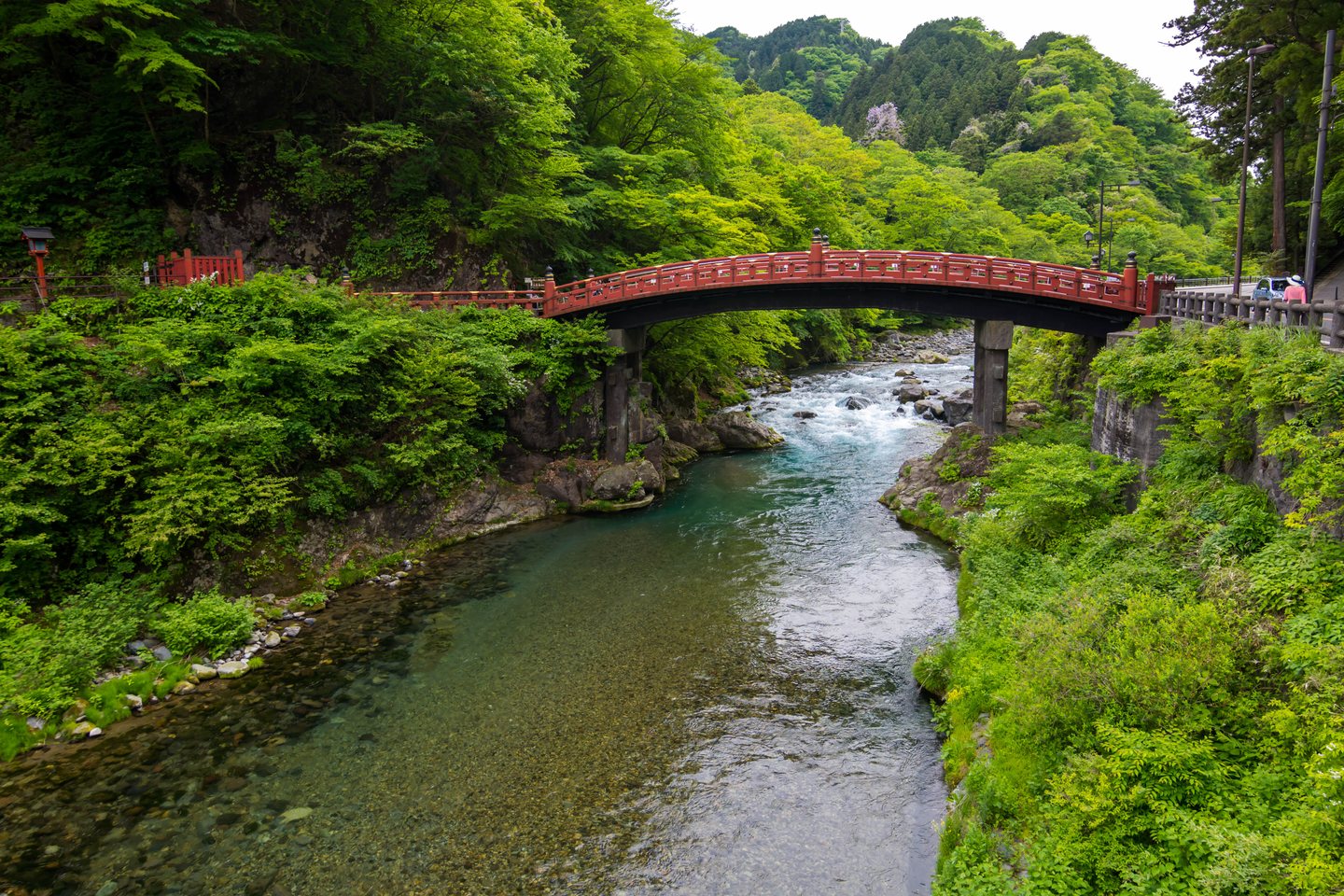
| 11:15–11:35 | Photograph Shinkyo Bridge from the public approach. |
| 11:45–13:30 | Make Toshogu your main visit. This is our suggested time allowance, not a guided-tour duration. |
| 13:30–14:30 | Lunch and a proper break. |
| 14:30–15:45 | Choose one: another nearby temple, Kanmangafuchi if conditions suit, or a café and shops. |
| From 16:00 | Work back toward the station; leave a buffer for the local bus. |
| 17:44 | SPACIA X No. 12 leaves Tobu-Nikko. |
| 19:31 Tokyo Skytree / 19:35 Asakusa | Arrive back in Tokyo. |
For more daylight, consider the earlier 07:50 Asakusa / 07:53 Tokyo Skytree departure, arriving at 09:39. In late autumn and winter, complete outdoor walks early; the evening return is mainly about getting home comfortably.
What to do between trains
Shinkyo Bridge: the red bridge is an easy first orientation stop near the shrine district. Viewing and photographing it from the public roadside is different from buying admission to walk onto the bridge. Follow signs and stay clear of traffic. Shinkyo visitor information.
Toshogu: allow time to look at the carvings and buildings rather than rushing to collect photo stops. Check the shrine’s linked official site for admission options and seasonal opening hours; some paths involve steps. Toshogu visitor information.
Kanmangafuchi Abyss: a riverside alternative to a second temple, with a line of Jizo statues beside a small gorge. Allow travel time from the shrine area as well as the walk itself. In wet or icy conditions, choose the café option instead. Kanmangafuchi visitor information.
Lunch: eat in central Nikko rather than adding a long detour for one restaurant. Look for yuba, the local soy-milk-skin specialty, and check ingredients if you avoid fish stock or other animal products. Nikko food guide.
Prefer someone else to handle the logistics? Compare guided trips, but read the pickup point and transport details: a coach tour does not automatically include SPACIA X.
Compare Nikko tours — affiliate →
Alternative: Nikko in two days and one night
Choose this version when you want a mountain day as well as the historic town. Our suggested order keeps the shrines together on day one and the lake and waterfall together on day two.
Day 1: train, shrines and a relaxing evening
Take a morning train, visit Shinkyo and Toshogu, and have lunch. Then either check into a central-Nikko hotel or continue by bus to accommodation around Chuzenji Onsen. If you book a ryokan with dinner, make its check-in and meal times the fixed point of your afternoon. Do not schedule a late temple visit followed by an uncertain mountain bus connection.
Day 2: Lake Chuzenji and Kegon Falls
After breakfast, travel to the lake area if you stayed in town. Visit Kegon Falls, spend time along the lake shore and stop for lunch. The falls can be seen from different observation areas; the elevator to the lower viewing platform has a separate charge. Keep enough time to return to Tobu-Nikko before your reserved train. Kegon Falls information · Lake Chuzenji background.
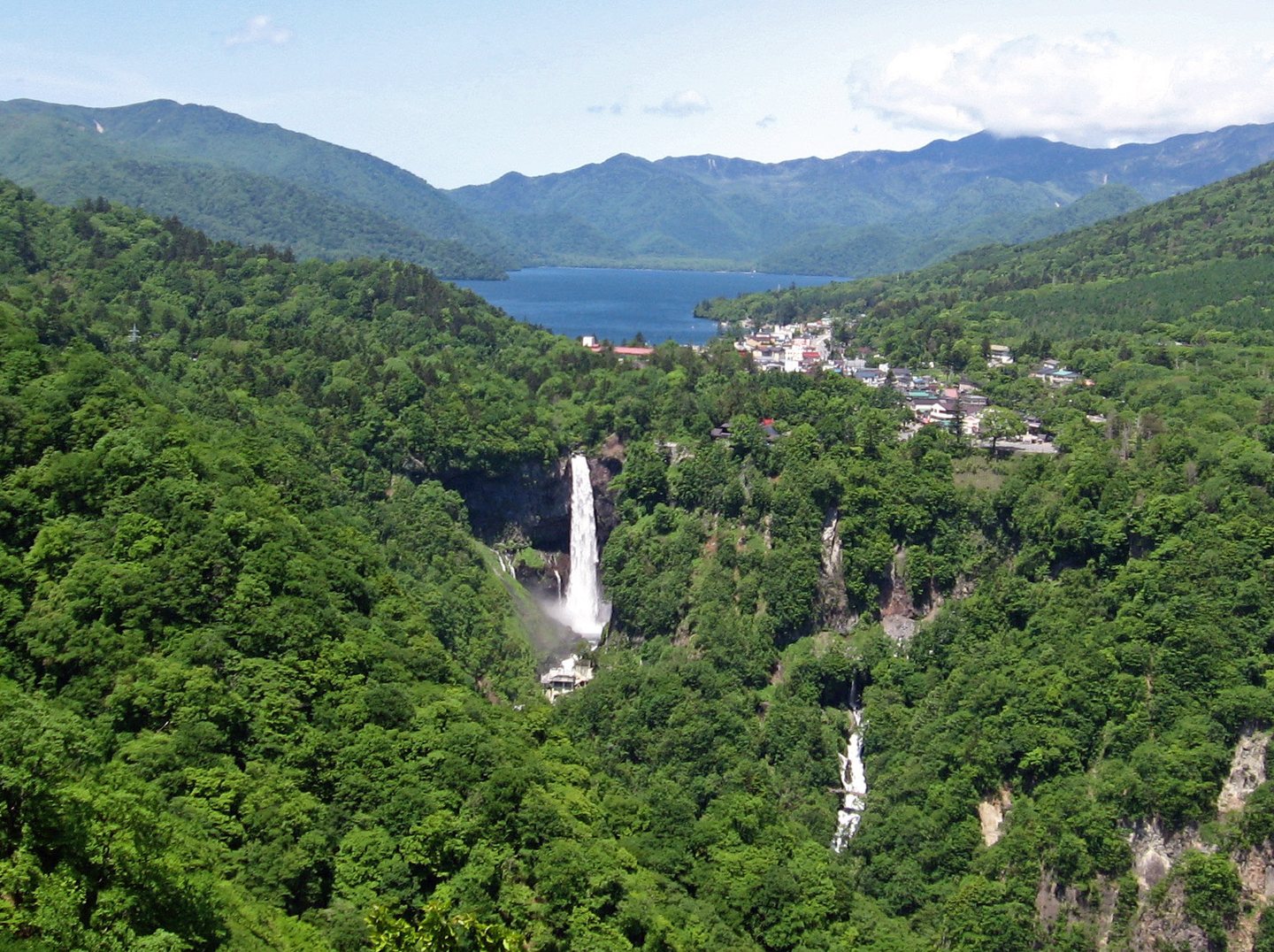

Current closure: do not add Akechidaira Ropeway to a 2026 itinerary. Tobu lists its suspension from January 16, 2026 to August 31, 2027, with possible extension. The photograph above is an elevated overview, not a viewpoint promised by this walking itinerary. Official closure notice on Tobu’s pass page.
Treat a lake cruise as optional and seasonal, and check operation before planning around it. On autumn weekends, queues and road congestion can reduce what you can do. For the return, choose a bus that leaves meaningful contingency before the reserved train rather than relying on a tight connection.
Where to stay for one night
| Base | Best reason to choose it | Trade-off |
|---|---|---|
| Central Nikko | Easy access to the stations and shrine district | You still need the mountain bus on day two. |
| Chuzenji Onsen / Lake Chuzenji | Wake near the lake and waterfall area | Mountain transport and meal times need more planning. |
| Kinugawa Onsen | Make a hot-spring resort stay the focus | It is on a separate railway branch; it is not the simplest base for this lake itinerary. |
For a couple, check whether the room rate includes dinner and breakfast, whether the bath is shared or privately bookable, and whether taxes are additional. “Ryokan” does not by itself guarantee a private onsen. Use the map on the booking site, not only the word “Nikko” in the listing.
Compare Nikko hotels and ryokan — affiliate →
Want another train experience instead of the lake? Consider SL Taiju between Shimo-Imaichi and Kinugawa-Onsen. It needs a separate seat reservation and an operating-calendar check; use it as an alternative focus, not an extra squeezed into the temple-and-lake plan. Official SL Taiju guide.
When is the best time to visit Nikko?
For autumn color, altitude matters. Typical foliage windows are late September–late October in Oku-Nikko, late October–mid-November in central Nikko, and mid-October–late November around Kinugawa–Kawaji. These are seasonal ranges, not a forecast for a particular year. Nikko’s official seasonal FAQ.
For a late-November visit, plan around the train and historic town; remaining bright leaves are a bonus. December favors an unhurried town visit or an onsen stay, with warm layers and weather checks before mountain excursions. Avoid assuming that a Tokyo foliage photograph describes conditions up at Lake Chuzenji.
Spring brings blossoms at different times by elevation, while the greener months suit travelers who want forest and lake scenery. Match your route to the weather rather than treating every season as the same itinerary. Nikko National Park seasonal experiences.
Weekdays are our first choice for flexibility, but Friday is not a guarantee of quiet. For example, November 20, 2026 precedes the November 21–23 long weekend, with Labor Thanksgiving Day on Monday. Book the seats you want in advance. Official 2026 holiday calendar.
Nikko tickets and a realistic day-trip budget
Start with transport, then add admissions and meals. The following are planning figures, not live quotes.
| Item | Adult planning amount |
|---|---|
| NIKKO PASS World Heritage Area | ¥3,000; valid for two days, covering the eligible round-trip basic rail journey and designated local transport |
| SPACIA X Standard limited-express charge | ¥1,940 each way at the normal-season rate for Asakusa–Tobu-Nikko |
| Two-person Cockpit Lounge supplement | ¥1,000 for the two-person seating unit, one way, on top of each passenger’s basic fare and Standard express charge |
| Meals and drinks | Allow ¥2,000–3,500 per person; our editorial allowance |
| Admissions | Keep ¥2,000–3,000 per person as a planning allowance; actual total depends on what you enter |
Sources: World Heritage Area pass, SPACIA X seating charges and Tobu’s seasonal fare schedule. Express charges vary by season. Recheck eligibility, coverage and the fare for your actual boarding station.
For two adults, two World Heritage Area passes plus SPACIA X Standard in both directions total ¥13,760 at normal-season express rates. Upgrading the outbound to a two-person lounge brings that example to ¥14,760. Add the above food and admission allowances for an overall planning budget of roughly ¥23,000–28,000 for two, excluding transport within Tokyo, shopping and other extras.
For the overnight route, compare separate tickets and local bus passes with the NIKKO PASS All Area, currently ¥8,000 per adult for four days. Its wider coverage can be useful, but it is not automatically the cheapest choice for two days. Neither pass includes limited-express supplements or shrine admissions. Hotel costs vary substantially by date, meals and room type; compare a live total for both guests. All Area coverage.
If boarding at Tokyo Skytree, a digital pass avoids a separate trip to collect a paper voucher in Asakusa. Follow the purchase instructions for the product you choose.
Frequently asked questions
Can I visit Nikko without a car?
Yes. The central itinerary uses a train, local bus or taxi, and walking. The mountain extension relies more heavily on bus schedules. Check the last useful bus before setting off on a walk.
Is SPACIA X essential?
No. It is a pleasant upgrade if the train experience matters to you. Another suitable Tobu limited express still gets you to the same destination; spend on the lounge only if you value that atmosphere.
Can I fit Toshogu, Lake Chuzenji and Kegon Falls into one day?
Some travelers do, but we would not call it the relaxed version of this trip. An early start, short visits and favorable traffic become important. The overnight plan is our recommendation for enjoying both areas.
Is the trip suitable for travelers who need to minimize walking?
Adapt it to one main attraction, use buses or taxis between areas and ask the attraction about step-free access before booking. Shrine steps and uneven riverside paths mean the full walking plan will not suit everyone.
What should I book first?
For a day trip, choose your train and seats first. For an overnight stay, check train availability alongside your accommodation and meal times. Keep the return journey booked and leave a local-transport buffer.
Ready to plan your Nikko trip?
Choose one day for the train and historic town, or two days for the town plus the mountains. Then check official train availability, compare the right pass, and build the rest of the day around those times.
Continue with our Day Trips from Tokyo collection, Tokyo temple guide or Tokyo street-food guide.